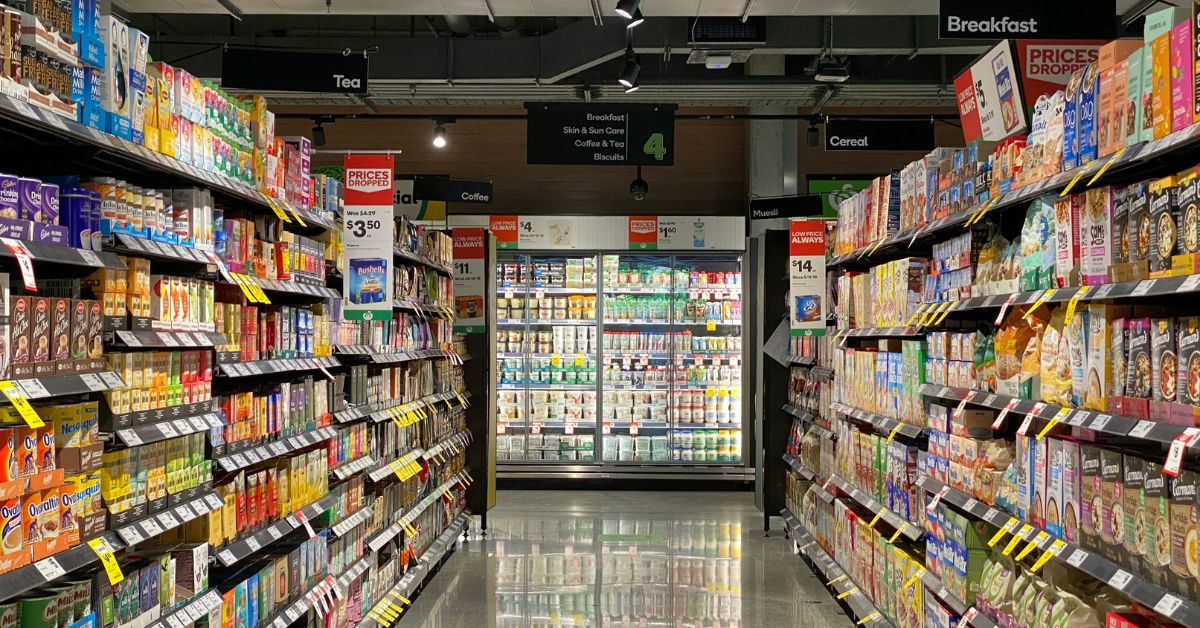
Our food environment isn’t set up for health.
High protein here.
Made with real fruit there.
And don’t forget: no added sugars.
Here’s a general idea to keep in mind…
When you see a health claim, run for the hills.
Because here’s the thing:
Real food doesn’t have a marketing budget. So no outlandish claims are needed. Only ultra-processed food does.
Real Food Doesn’t Need a Marketing Budget
You know the type of food-like products where huge companies and corporations add, change, and do god knows what else to a list of ingredients that we end up not even recognising anymore.
And then they market it to the hills with all types of claims and fancy marketing tactics.
Take Cereal: Ultra-Processed and Over-Marketed
Take Coco Pops, or Froot Loops, or any cereal, a prime culprit in the food landscape for being ultra-processed and marketed until the cows come home.
What are meant to be healthy whole grains are so chemically modified that we don’t even recognise them anymore!
But they taste good, so it’s all good.
Well, not really.
The health effects often aren’t felt right away. And even when they are, a bit of nausea, some GI distress, we suck it up and eat the same food a few days later, because here’s the uncomfortable truth:
Our brains have been hijacked.
How Ultra-Processed Food Hijacks the Brain
Our brains have been hijacked by these big food companies, who hire food scientists to make food- if we dare call it food- taste so good, heavenly even, that the pleasure centres of our brains can’t get enough.
Often that means eating these products too much and too often. That’s one of the side effects of the hidden chemicals and compounds found in them.
They taste so good. Chemically designed that way. We just can’t help ourselves, and it’s not our fault. We’re fighting an uphill battle.
It is our responsibility, though, no matter the battle. Because at the end of the day, we buy these products from the supermarket or fast-food chain of choice, and we put them in our mouths.
That might sound harsh. But isn’t it the truth?
No one forces us to grab a box of Coco Pops or eat that Big Mac.
That choice is ours. Even if, to a large degree, we’ve been manipulated, gaslit, and deceived.
And that doesn’t even take into account the argument: well, Luke, if I don’t eat [enter ultra-processed food of choice], what do I eat?
So What Should We Eat Instead?
I have empathy, yet I struggle with this at the same time, because it’s so evidently obvious…
Real food!
Fruits, veggies, nuts, seeds, meat, fish, poultry, dairy, legumes, whole grains, and so on.
Of course, a variety of factors, like tolerances to certain foods, matter and are to be taken into consideration. That’s called personalised nutrition.
But for the most part, real food from Mother Nature, not artificial food-like products or packaged goods full of chemicals and nasties, is the way to go. It’s one of the foundations of holistic health.
Think of it another way:
An apple doesn’t have a marketing budget.
You won’t see an ad claiming an apple has this or that, or is good for ABC.
Yet these are the foods to move towards. Not the ultra-processed ones, with their massive marketing budgets used to convince us to buy through fancy ads, colourful packaging, and health claims, despite negative health consequences often only felt decades down the line.
This is most people’s framework, because we see the ads. We get brought up on them, so they become all we know. That’s where my empathy comes from, alongside the fact that, as I said, once we start eating these products, our brains become hijacked, and there seems to be no way out.
That’s why education matters. And it’s why our food environment is failing us.
If this is the narrative we see, if this is what we get brought up on, it becomes what we believe. It shapes our reality; it shapes our life.
Remember: our perspective shapes our reality.
Is Eating Healthy Really More Expensive?
Unfortunately, part of that narrative is that eating healthy is expensive.
Yes, if we want caviar every night, it is.
But fruit and veggies, aka real food, aren’t that much more expensive than ultra-processed food. From what I can tell, most of the time they’re actually cheaper.
A pack of 5 bananas: £0.78. A pack of 6 apples: £1.28. Whereas that box of Coco Pops is £3.30 in my local supermarket alone.
You could make a healthy fruit salad with some Greek-style yoghurt for the same price as a bowl of sugar-loaded cereal, no doubt. And if the hard part is knowing where to start, brands like WellEasy make this a little simpler.
Eat More Real Food: The Simple First Principle
When we take a step back and see the wood for the trees, we begin to realise our food environment isn’t set up for our health.
It’s not our fault; there are many forces against us. It is our responsibility, though, to become more educated and better informed, so we can start to make healthier choices from first principles:
Eat more real food. Less ultra-processed food-like products.
At the end of the day, it’s that simple.
Key Takeaways on Our Food Environment
- Ignore flashy claims: Heavily marketed food products often hide ultra-processed ingredients behind bright packaging and health claims.
- Recognise brain hijacking: Food companies engineer ultra-processed products to trigger pleasure centres in your brain, making overeating hard to avoid.
- Choose whole foods: Swap artificial products for items direct from nature, like fruit, vegetables, nuts, and fresh meat.
- Budget wisely: Real, nourishing food often costs less than branded ultra-processed alternatives like sugary breakfast cereals.
- Take personal responsibility: While the food industry tries to trick you, you still control what you buy and eat.
FAQs for Why Our Food Environment Isn’t Set Up for Our Health
Why do ultra-processed foods have so many health claims on their boxes?
Real food does not need a marketing budget because it speaks for itself. Giant corporations use bold claims to distract you from chemical additives in ultra-processed products.
How do ultra-processed foods affect your brain?
Food scientists intentionally design these products to stimulate pleasure centres in your brain. This chemical design makes you crave more, leading to overeating without you even realising it.
Is healthy food really more expensive than processed food?
No, fresh ingredients are often much cheaper. A pack of apples or bananas typically costs far less than a single box of sugary cereal at your local supermarket.
How can you start eating better in a misleading food environment?
Focus on first principles. Fill your plate with fresh fruits, vegetables, nuts, seeds, and quality proteins while cutting back on packaged food-like items.
Who is responsible for your dietary choices?
Food companies manipulate your choices through clever advertising, but you hold final responsibility for what you buy and put in your body. Education helps you see past the marketing tricks.