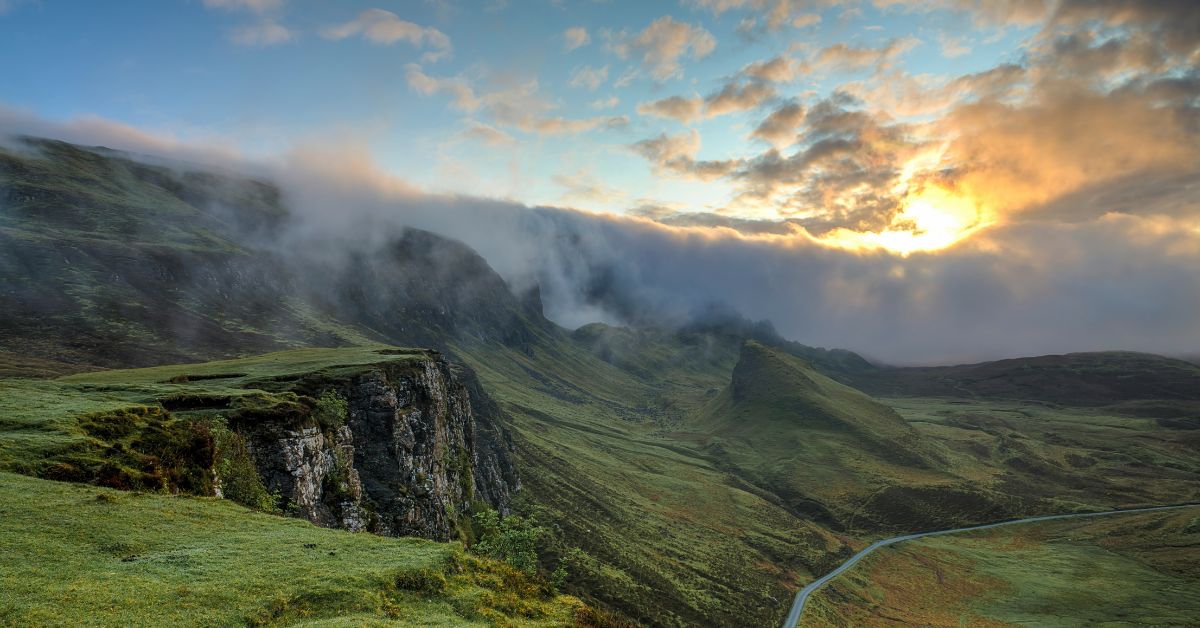
Nature can teach us a lot, from its solitude and presence to the essence of growth and how everything is always evolving.
Its vastness, though, is what stands out to me most. It’s not to be underestimated, and it has a way of putting our challenges, our problems, and life itself into perspective.
The Vastness of Nature
It’s often only when we step out of our busy day-to-day lives, even if it’s just for a few moments, and go and spend some time in nature, that we really start to get to grips with its vastness. Even then, truly coming to grips with it is often far beyond what I feel we can take in. Nature is that vast, in its essence and in its presence.
I don’t know about you, but when I start to notice it, when I spend any amount of time in nature just taking it all in, basking in its presence, in the moment, it seems like all of my problems, from the little day-to-day inconveniences to the big life worries, concerns and things I’m facing, seemingly disappear. Or at least they become less potent than I think and feel they are when I’m caught in the midst of them.
The vastness of nature puts what we’re dealing with into perspective in a way that triggers us to question what really and actually matters.
Nature Doesn’t Solve Our Problems, But It Changes How We See Them
That’s not to say the things we’re dealing with in our daily lives don’t matter or are insignificant. We may be facing financial difficulties, health problems, relationship struggles, unemployment, or just struggling to get through the day.
Nature doesn’t solve what we’re going through. Neither does spending time in it, whether that’s a nice walk, a hike, or just sitting on a park bench somewhere, taking in the view of the countryside, or sitting by the sea.
What it can do, though, is give us a new take. A new perspective on how we look at and associate with whatever we’re going through (and we all have something, either now or in the future). It can re-energise us to seek new solutions and answers.
It’s Rarely the Problem That’s the Problem
Oftentimes, and I’ve been guilty of this myself, it’s not the issue, challenge or problem that’s the actual problem. It’s how we relate to it. Our perspective on it, how we’re viewing it, and the meaning we attach.
This concept can be difficult for many to accept, myself included, especially when we’re in the midst of the problem. There’s often so much emotion at play that separating ourselves from it is difficult at the best of times.
That’s what nature allows us to do: to create a little bit of separation, a little bit of space, so we can see what we’re going through through different lenses. A new perspective, which can often change what we’re going through in and of itself.
We Suffer More in Our Minds Than in Reality
It reminds me of a profound lesson: we often suffer more in our minds than we do in reality.
This is a profound one to keep coming back to. To question ourselves whether, and to what extent, the challenge or problem at hand is as bad or as big as we think it is, or are making it out to be.
Remember, it’s our perspective that shapes our reality. And nature is fundamentally good at providing us with a wider, broader perspective that many of us, myself included, struggle with.
Not because we’re inherently flawed in any way, although some sections of the interweb might disagree. Sure, we all have our shortcomings. But lacking perspective at times isn’t something to feel bad about, or criticise yourself for. It’s part of the human condition, especially when we’re caught up in intense emotions.
Learning to Respond, Not React
The way through such emotional states is to learn, over time, to respond more than react. To feel our feelings without judging them as good or bad, and to develop the skill set to self-regulate in a shorter time horizon as we grow and evolve.
It’s difficult to do that when we’re always on the go, caught up in the hustle and bustle of life. I get it.
A Simple Nature Practice for Presence
Not everyone is into meditation and the Zen life. However, that’s not to say that developing some sort of practice that works for you, to live more in the present moment, isn’t worth having a really good, long, hard think about.
It could be as simple as five to ten minutes spent in nature, taking in everything around you, using all of your senses.
I’m confident you’ll soon realise the vastness of nature for yourself, and how its essence and presence puts whatever you’re dealing with today into some sort of perspective. And over time, once practised consistently, it can give you a renewed sense of energy and clarity to deal with whatever life throws at you, and help you respond more than react.
Not all of the time, because at the end of the day we’re human, and we’ll fall from grace. But more of the time, to most of the time. So you can start to navigate life with more ease, grace and flow, and less reactivity, angst, unease and dysfunction.
And isn’t that part of the ultimate goal?
Because at the end of the day, life is always going to throw challenges, inconveniences, struggles and hardships at us. How we choose to respond to them, not react, is what matters.
Nature can help us on our way.
Key Takeaways for How Nature Puts Life Into Perspective
- Nature’s vastness: Time spent taking in nature makes both daily inconveniences and big life worries feel less potent, prompting you to question what really matters.
- Nature is not a fix: A walk, a hike or a sit by the sea will not solve financial, health or relationship struggles, but it can give you a fresh perspective and the energy to seek new solutions.
- Meaning over problem: How you view a challenge, and the meaning you attach to it, often matters more than the challenge itself.
- Separation and space: Nature creates a little distance from intense emotions, so you can see your situation through a different lens.
- Suffering in the mind: We often suffer more in our minds than in reality, so ask whether a problem is really as big as you are making it out to be.
- Lacking perspective is human: Losing perspective during intense emotions is part of the human condition, not a flaw to criticise yourself for.
- Respond, not react: Feel your feelings without judging them as good or bad, and build the skill to self-regulate more quickly as you grow.
- Five to ten minutes: A short spell in nature using all of your senses, practised consistently, builds presence, energy and clarity.
FAQs for How Nature Puts Life Into Perspective
How does nature help put problems into perspective?
Nature helps by showing you something far bigger than your worries. Its vastness creates a little separation and space between you and whatever you are facing, so daily inconveniences and bigger concerns feel less potent. That space lets you see the situation through a different lens and question what really matters.
Does spending time in nature solve your problems?
No, spending time in nature does not solve problems such as financial difficulties, health issues or relationship struggles. What it can do is change how you view them. A walk, a hike or a few minutes by the sea can give you a fresh perspective and the energy to look for new solutions.
How long do you need to spend in nature to feel the benefit?
Five to ten minutes is enough to start. Spend that time taking in everything around you and using all of your senses. The bigger shift comes from consistency: practised regularly, short spells in nature build a renewed sense of energy and clarity for handling whatever life throws at you.
What is the difference between responding and reacting?
Reacting is the instinctive, emotional reply to a situation. Responding is a chosen reply made with some space and perspective. Learning to respond means feeling your feelings without judging them as good or bad, and building the skill to self-regulate more quickly over time. The aim is not every time, but more of the time.
Do you need to meditate to live more in the present moment?
No, you do not need meditation or a Zen lifestyle to live more presently. Any practice that works for you counts. A simple option is five to ten minutes in nature, taking in everything around you with all of your senses, and coming back to it consistently.
What does it mean that we suffer more in our minds than in reality?
It means the way we view a problem often hurts more than the problem itself. Our perspective, and the meaning we attach to a challenge, shapes how heavy it feels. Asking whether the problem is really as big as you are making it out to be can ease a lot of that suffering.