Shopping at alternative health shops has always been at least part of my life, despite being often criticised, frowned upon, and ridiculed by extended family, who often made side remarks and comments like, “Why are you shopping there?”, “It’s so expensive”, “They’re rip-off merchants,” etc.
And to be honest, it wasn’t just them. Even my own Dad wasn’t always too impressed when my mum, brother, and I came back from our local health shop with a bag of alternative goods you wouldn’t find in a standard supermarket.
We shopped there because we thought we were doing the honest, right thing for our health, replacing refined sugar with alternatives like xylitol and stevia, and your standard Coco Pops with a healthier alternative only found in these local health shops on the high street.
The Health Food Landscape 15 Years Ago
This was fifteen-plus years ago, when health-conscious brands were limited. There were Rheal, WellEasy, and Healf of the World. The whole health landscape was completely different.
You had to go to these places to find healthier alternatives to what was in the standard supermarket. That said, there were definitely more local greengrocers, butchers, fishmongers and quality bakers you could trust, because our food was more sourced and bought locally than it is today.
Over time, the supermarkets, part of Big Food, took over local produce, and gradually our food landscape became what we see and live in today.
But what happens when you don’t want to feed your children sugar-laden cereal, and the food landscape is changing right in front of your eyes?
The local alternative health food store provided a real, good alternative to these products, offering better-quality wholegrain cereals, not the refined types we see in supermarkets, as a practical solution.
Sure, today more supermarkets are becoming health-conscious. Just look at M&S’s “Only… Ingredients” range, a positive step in the right direction that didn’t exist only a couple of years ago.
Point being: the local alternative health food store was a good alternative to the mainstream.
Why Health Food Shops Aren’t Always as Healthy as We Think
However, that said, the older and more health-conscious I’ve got, looking into and researching this stuff, the more I’ve realised that local alternative health food stores, the one on your street, aren’t actually as healthy as we think.
Sure, they don’t sell Coco Pops, and you won’t find a Mars Bar or any of that junk food there. But that doesn’t mean they’re inherently healthy, and when you begin to dive deeper and actually check the ingredient labels of their products, you’ll begin to see this for yourself, and maybe, like me, be surprised by the junk and hidden nasties that still reside in these products, despite them coming from a “health food store”.
While they may not always use the same ingredients as big food, what their products can include isn’t much better; they aren’t much healthier either.
It depends on how we define health, both individually and collectively. That said, at least for me, any ingredient on the label that our ancestors or great-grandmother wouldn’t recognise should at the very least be questioned, let alone consumed blindly, which many of us resort to by default.
A Wake-Up Call at the Bakery Counter
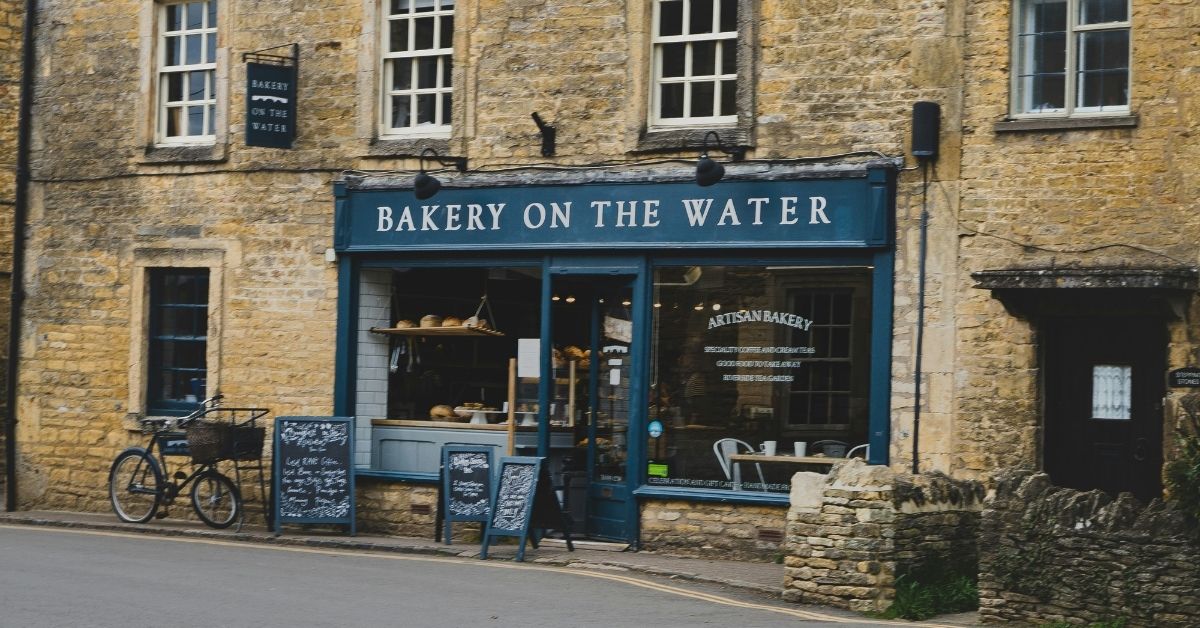
This hit home to me just the other week, when, spontaneously and purposely not taking and prepping my own food while out and about, I decided to get something from the bakery section of a local alternative health food store.
Being the geek I am, and very health-conscious, you bet I did ask for the ingredients list of everything on offer, and this is where I was blown away by what was in the baked goods from a so-called health food store.
And I’m not even talking about the bars and other things on the shelves. These, I understand, can still be sugar-loaded and have hidden nasties like emulsifiers, etc., for shelf-life purposes, or so we’re told.
However, the baked goods, the foods the store makes themselves, well, I was blown away, because in my mind, when anyone, including you and me, is more in control of the ingredients they use, they have a greater responsibility for the ingredients they choose.
In this context, do they really, really need to include E-numbers? Or, how about seed oils? And that’s not even to mention using standard refined white sugar.
The Real Lesson: Choice Is Our Superpower
This points to a valuable lesson:
When we have more control over what we put in our food, i.e. the food we cook, make, and bake ourselves, we have a choice, and that choice is our superpower.
We can choose health, or not. We can choose ingredients that are health-affirming, or those that take our health away.
And I would have thought that local alternative health food shops would choose the health option more often than not, which isn’t necessarily the case. Maybe it was just the handful I visited who fell into the trap of optimising for profit over anything else, and defaulting to what’s most convenient.
Do I blame them? Not really. It isn’t about blame, at the end of the day. It’s about highlighting our food landscape and how what we think is healthy isn’t always the case, even when we’re buying our food, groceries, and produce from local, alternative health food stores.
And to play devil’s advocate, it’s not like they’re inherently bad, and their foods are probably slightly better than what you’d find in your standard supermarket.
I just can’t get away from the perception they often paint in customers’ minds: that they are healthy. I mean, it’s in the name, at the end of the day, “health food”.
This raises many questions, from our expectations to our perspective and how they shape our reality, to highlighting our current food environment, to personal choice and agency, to one of the most practical things we can do, no matter where we shop:
To always check the ingredient label.
The One Practical Habit: Check the Ingredient Label
It’s by far one of the simplest and most practical things we can do when navigating health.
Check the ingredient labels of the foods we buy.
If there’s something we don’t recognise, be sceptical and question it through the lens of: would my grandparents, or even great-grandparents, recognise this? Whatever “this” is.
If not, avoid. But that’s up to you.
The Five-to-Seven-Ingredient Rule
Here’s a bonus tip for you:
Implement a general rule of five to seven ingredients maximum. Beyond that, whatever we’re looking at buying is starting to get into some delicate, questionable territory about what’s actually going into our food.
Because real food typically only has one ingredient: the food itself.
In other words, an apple doesn’t have an ingredient list. It’s an apple. We know what it is.
But that box of… enter an endless array of items… most of us have no idea.
Typically speaking, the more ingredients there are, the more likely it’s an ultra-processed food and not good for our health.
It goes without saying, but I’ll cover it anyway: this isn’t always the case, and a product could have some of the worst ingredients on planet Earth but only three in total. I get that. But I’m yet to find this, and in most cases it isn’t, because the amount of preservatives, additives, and emulsifiers that food brands, big and small, have to inject into food or food-like products to keep them shelf-stable is far beyond just five to seven, more like twenty-seven. You get the point.
Navigating Our Modern Food Environment
All this is to say that in our current food environment, in our current landscape, we have to be extremely careful and conscious of the choices we make, even when we think we’re doing the right thing, like with my example of not shopping at a big supermarket chain and going to local alternative health shops instead. It’s not always as healthy as we think it is.
Even some local bakers, from what I’ve seen, have turned to ingredients that aren’t good for health, but put them in their products anyway.
This is a contributing factor that can make health feel overwhelming and a minefield to navigate. I get that. And I experience it daily.
One of the most practical and simplest ways to navigate this is to just check the ingredients and always ask, “Can I see the ingredients list?” Whether shopping, eating out, or whenever buying food.
From my mini experiment, most are open to doing so. There was only one local coffee shop that couldn’t provide me with an ingredients list, which was a red flag in itself, and out the door I walked.
If you’re serious about health, with our modern environment, checking the ingredient label has become a necessary step. If you honestly don’t care what’s in your food, then that’s okay; good job becoming the healthiest version of yourself.
This isn’t to say we can’t have a sweet treat. Many use the 80/20 principle. Find what works for you. I like to leave special occasions, birthdays, Christmases, etc., for indulging more than I typically would, and then offset the effects through fasting, dialling up exercise and physical activity, and other strategies that may not be for everyone.
Again, I’m really into this stuff.
But to say you don’t care about what’s in your food will, at least in my opinion, often just mean leaving your health at the front door, the reality being that our environment is unhealthy by default.
Awareness Is Where Agency Begins
In summary:
Check the ingredient labels of everything you buy, and apply a basic rule like five to seven ingredients, if not single ingredients most of the time, no matter where you’re buying your food.
These are practical things we can do without getting into the weeds of nutrition protocols like keto, vegan, paleo, you name it.
And, sure, local alternative health food shops could be better than big food or big supermarket chains on some level.
However, they’re also not as healthy as we believe, or as they portray themselves to be.
And when we see this for ourselves, like by checking ingredient labels, we’re able to make the next best choice possible, whether to buy the food or not. That’s where our agency lives. We can only cultivate it once we are aware and conscious. That’s why we check.
Without awareness, we’re unable to make healthy choices that keep us on the path towards better health and well-being, and we end up making choices that take our health away instead, almost by default, because the reality is that our environment is unhealthy by default, so we retreat to the mean. It’s just what happens when we aren’t aware, conscious, or intentional, I’m afraid.
Learn to be more aware, more conscious, and make decisions that affirm your health rather than take it away. It might be easier said than done, but that doesn’t mean it isn’t possible through simple, practical habits and practices like just checking the ingredient labels. Try it.
Key Takeaways on Are Health Food Shops Actually Healthy?
- Shifting Food Landscapes: Local health shops once served as vital alternatives to traditional supermarkets, but mainstream shelves have slowly adopted similar products over time.
- Hidden Ingredients in Health Stores: Products sold in alternative health shops often contain additives, seed oils, and refined sugars despite their healthy image.
- Question Bakery Items: Even fresh bakery counter items inside health food stores can contain unexpected E-numbers and shelf life enhancers.
- Control Over Choices: Preparing your own food gives you direct control over your ingredients, letting you choose options that support your well-being.
- Checking Labels First: Looking at the ingredient list on every package helps you spot items your ancestors would not recognise.
- The Ingredient Count Rule: Limiting your packaged food purchases to items with five to seven ingredients helps you avoid ultra-processed items.
- Building Daily Awareness: Asking for ingredient lists when shopping or eating out helps you make informed decisions in an environment filled with processed options.
FAQs for Are Health Food Shops Actually Healthy?
Why do health food shops sell items with ultra-processed ingredients?
Many health shops focus on convenience, shelf life, or profit margins, which leads them to stock items with additives, seed oils, or refined sugars.
How can you tell if a health food product is actually good for you?
Look directly at the ingredient label rather than relying on marketing claims. If you see items your great-grandparents would not recognise, consider avoiding them. Look for simple, real foods.
What is the five to seven ingredient rule?
This practical guideline suggests choosing packaged items with no more than five to seven ingredients. Items with longer lists often contain extra preservatives and emulsifiers.
Are supermarket health ranges better than local health food store items?
Supermarket ranges have improved, but both options can contain hidden additives. Checking labels remains essential regardless of where you shop.
What should you do if a cafe cannot provide an ingredient list?
If a store or cafe cannot share its ingredient list, treating it as a sign to look elsewhere helps protect your overall well-being.