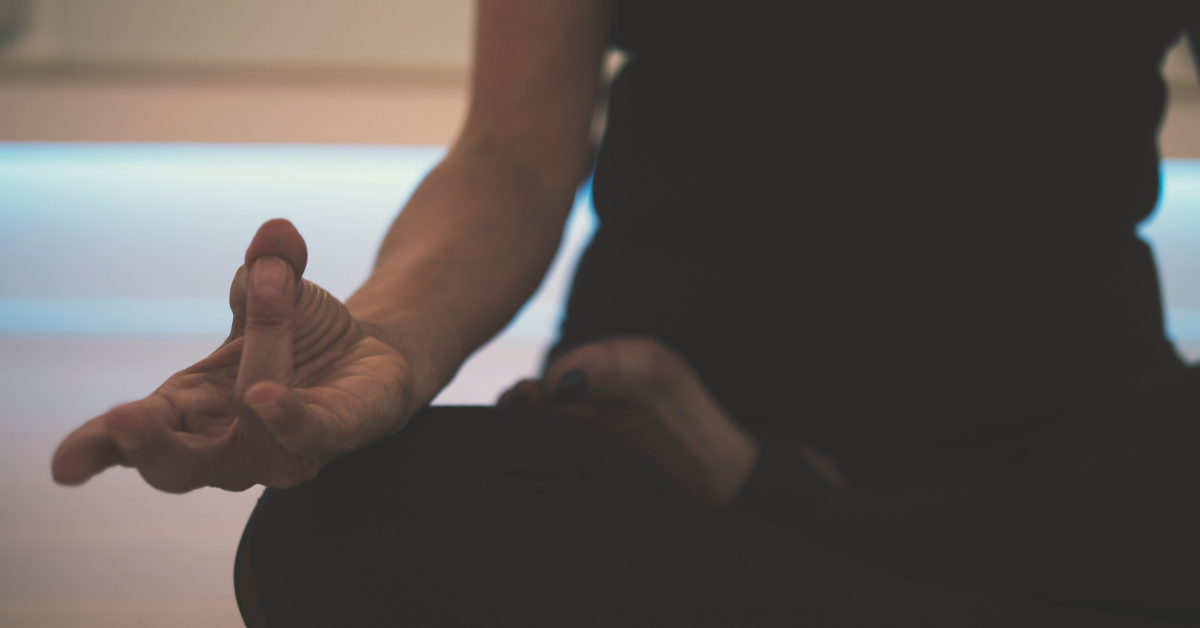
Meditation is often seen as a spiritual practice, and sure, there is that connection.
Maybe that’s down to how ancient cultures historically used this powerful practice to connect to deeper parts of themselves and a higher order of being, and that many still do to this day!
What I’ve recently realised, though, is that while this connection exists, meditation is more of a mind and mind-body practice than we realise…
The practice of meditation is many things, including learning to become aware of the mind without reacting to our thoughts or casting judgment.
My Biggest Misconception About Meditation
Many years ago, when I first started meditation (and I think this ideology still exists today), I thought it was about sitting in a lotus pose, maybe humming, with the expectation to clear every thought. And that if I didn’t, if I had a thought or got distracted, then I had somehow drastically failed.
Sound familiar?! 😅
However, having practised meditation for many years and, more importantly, having merged what I’ve learned with the teachings and wisdom of way more acute leaders in this space than me, I’ve realised this ideology couldn’t be further from the truth.
Meditation isn’t about clearing your mind and having no thoughts.
In fact, that’s nearly impossible. (More on that in a moment.)
What Meditation Actually Is
Meditation, as stated, is about becoming more aware of the mind through becoming present and fully connected to the moment.
This is most notably done through the power of the breath. (This differs from breathwork, which I may share more about another time.) According to a review of mindfulness-based interventions, formal practice often directs attention to the breath as a way of bringing awareness to the present moment.
When we come back to and have conscious control over the breath, aka our breathing, we shift our physiology, emotional and mental state. And it’s incredibly difficult to get too worried about the future or ruminate on the past because we’re living in the present moment. We’re focused on the here and now.
This is the start of all meditation. 🧘♂️
Forgetting and Coming Back
Once we’re here and we’ve accepted that clearing our minds is an impossible task and not the goal of meditation, we begin to be at peace with the fact that, at times, we’re going to be distracted by our thoughts.
That’s where the real meditation begins…
Because the practice of meditation is forgetting and coming back, forgetting and coming back, forgetting and coming back.
In other words, meditation is about getting ourselves into a state whereby we are calm, relaxed, and still, by focusing on our breath, and then waiting, watching, and observing the mind without reacting or casting judgment.
Powerful, right?!
Also, uncomfortable for most. Especially when we first get started.
Because we observe our thoughts, and we question: Oh sht, where did that thought come from? 😬
We judge ourselves for thinking negative or bad thoughts about ourselves, others, or the world, and immediately go into “never wanting to experience that again!”
Why We Judge Our Own Thoughts
The challenge is that negative or bad thoughts are an innate part of the human experience.
The mind is going to do what the mind is going to do, and these thoughts are part of that.
This doesn’t mean we don’t have any control over our minds.
In fact, through repetition, self-work, and conscious personal growth, we can reprogram our minds in any way that we choose, and learn to think and be more abundant, optimistic, and grateful more of the time.
That still doesn’t mean that we will never have a bad thought again.
The Law of Polarity states that everything has an opposite…
Therefore, there can be no good without bad.
And there can be no bad without good.
My point is: stop running away from negative or bad thoughts and learn to navigate and process them in healthier and better ways, because they are part of the human experience and aren’t going away any time soon. Even for the best of us!
The Mind Beneath the Calm
What we have to remember is that even when we are calm, relaxed, composed, and in a meditative state, supposedly with “no thoughts”, subconsciously, there are thousands of thoughts still bubbling away in the background.
We’re just not aware of them due to the state we’re in. And, being aware of them all would be overwhelming to say the least, so our minds are actually doing us a favour.
And this is where meditation can be helpful, because when we are in calmer, more composed states, we’re able to make more rational choices and decisions.
And therefore, live more consciously. ✨
Meditation as a Lifestyle, Not a Quick Fix
When meditation becomes part of our lifestyle, we become calmer and more composed most of the time and remember what truly matters to us.
We react less, judge less, and don’t let the small things bother us so much.
And when we fall from grace, we’re able to catch ourselves quickly and respond a little bit better, which we wouldn’t be able to do if meditation weren’t part of how we just do life.
Meditation is therefore a lifestyle intervention, just like eating nutritious food, regularly exercising, and getting adequate sleep.
Exploring all of this has brought up the following thought:
If the awareness of the mind isn’t the mind… what is it?
Is it part of something bigger? Maybe consciousness itself?
Anyway, I’ll let you ponder that one…
Meditation Is More Than Spiritual
The underlying message here is that meditation is not only a spiritual practice, as traditionally thought in some (and maybe most) Western cultures. That could be why there’s a bit of taboo around it, because we Westerners don’t really like the concept of spirituality. (More on that another day.)
Meditation is also a powerful mind and mind-body practice that enables us to observe the mind and all of the thoughts it brings up, without reacting or casting judgment. A study on mindful breathing found that this practice of noticing the mind wander and gently returning to the breath is central to how mindfulness reduces our negative reactions to our own thoughts.
Sure, you may experience spiritual insights too. Many do.
Just don’t let the spiritual connection with meditation put you off all of the amazing benefits that this powerful practice can, and so often does, have.
How to Actually Start Meditating
There isn’t only one way to meditate.
You can meditate in whichever way you like, guided or not, lying on your bed, sitting in a chair; it doesn’t really matter.
The common denominator is getting rid of all distractions, such as your phone, technology, etc., and intentionally setting aside some time. Five or ten minutes is a great starting place to just be in the present moment, observing how the breath happens automatically, and focusing there.
It’s there that you will begin to notice, more consciously, all of your thoughts.
They will distract you from focusing on the breath, but as explained (hopefully well enough 😅), this is the whole point of the practice.
Remember:
The practice of meditation is forgetting and coming back, forgetting and coming back, forgetting and coming back.
The goal isn’t to clear your mind of all your thoughts, but to become more aware and conscious of them.
Key Takeaways on Meditation
- It’s Not About an Empty Mind: A common myth is that you must clear your mind of all thoughts. The reality is that having thoughts is a natural part of the process; trying to stop them is nearly impossible and not the goal.
- The Real Practice is Awareness: Meditation is about becoming aware of your thoughts without reacting to them or judging them. You use your breath as an anchor to bring yourself back to the present moment whenever you get distracted.
- Embrace ‘Forgetting and Coming Back’: The core of meditation is the cycle of your mind wandering and you gently guiding your focus back to your breath. This repetition is the actual work and where the benefits come from.
- Negative Thoughts Are Normal: Don’t be alarmed by negative or strange thoughts that appear. They are a part of the human experience. The aim is to observe them as they pass, not to fight them or judge yourself for having them.
- It’s a Lifestyle Practice: Think of meditation less like a quick fix and more like a consistent habit, similar to exercise or healthy eating. Regular practice helps you become calmer, react less to stress, and stay connected to what matters.
- You Don’t Need to Be Spiritual: While meditation can have spiritual elements, it is fundamentally a powerful mind-body practice. You can gain immense benefits without subscribing to any particular spiritual belief.
- Starting is Simple: You don’t need a special posture or equipment. Just find a quiet space, set aside five or ten minutes, get comfortable, and focus on your breath. That’s all it takes to begin.
FAQs for Meditation Is Not About Clearing Your Mind; It’s About This
Do I have to completely clear my mind to meditate properly?
No, not at all. This is one of the biggest misconceptions about meditation. Your mind is designed to think, so thoughts will always arise. The goal isn’t to have an empty mind, but to notice your thoughts without getting carried away by them.
So, what is the main goal of meditation if not to stop thinking?
The primary goal is to cultivate awareness. It’s the practice of observing your thoughts and feelings from a distance without judgment. By focusing on your breath, you learn to return to the present moment, which helps you become less reactive and more composed in daily life.
What does the phrase ‘forgetting and coming back’ mean?
This describes the fundamental process of meditation. You will inevitably get distracted by a thought (forgetting your focus on the breath), and the moment you realise this, you gently guide your attention back to your breath (coming back). This cycle is the exercise itself.
Is it bad if I have negative or weird thoughts while meditating?
It’s completely normal. The mind produces all sorts of thoughts, and judging them as ‘bad’ only creates more stress. Meditation teaches you to see these thoughts as temporary events, allowing them to pass without affecting your inner peace. The insights shared emphasise accepting this as part of the process.
How long should I meditate for when I’m a beginner?
You can start with just five or ten minutes a day. Consistency is far more important than duration when you’re building the habit. Find a time that works for you and stick with it, and you can gradually increase the length as you feel more comfortable.