The body can heal itself…
I fundamentally believe this to be true.
And we’ve all experienced it to some degree.
Early Signs of Natural Healing
As children, most of us were out playing, having fun, and enjoying ourselves. We fell over from time to time, grazed our knees, cut our hands, and had a few bruises.
At the time, they may have hurt. We may have even cried. But after a short while, we got back up and started playing again.
What followed over the coming days and weeks was our body healing itself, healing the graze, healing the cut, which, in most cases, we were unconscious of as we continued to have fun and live our lives.
We may have only noticed it again when the scab began to form, a vital part of the healing process, as the itchy feeling grabbed our attention. We’re told not to pick the scab because it will bleed and leave a scar.
But, as you and I have done many a time, we pick it anyway, and indeed, it starts to bleed.
Sure, this example is only on a minute level.
But that doesn’t disregard the fact that, whether it’s cuts, bruises, and grazes or something more serious, the body has the power to heal itself, and it will do so once it has the raw materials it needs.
When Healing Slows Down
Ever had a cut that took longer than before to heal?
That’s a sign of potential underlying issues, poor nutrition, or unhealthy lifestyle choices that can get in the way of the body’s natural healing power.
It’s a sign of a lack of raw materials in one way or another.
This is where, sometimes, and unfortunately, increasingly frequently in our modern world, the body gets stuck.
And it needs a helping hand.
The challenge is when the body stays stuck. This is when we experience chronic sickness, illness, and disease.
You know the type that lasts beyond a few days or weeks, and we end up pushing through, navigating this thing called life as best we can, with everything feeling that little bit more difficult than it used to be.
It’s the chronic back pain, digestive issues, skin problems, and more that make life harder to navigate, not to mention chronic diseases such as diabetes, heart disease, or severe depression.
Unfortunately, many of these conditions are on the rise.
In fact, according to the Office for National Statistics, roughly 30% of the UK population lives with at least one long-term chronic condition.
And that’s data from 2022, four years ago at the time of writing.
If we stopped for a moment and looked around, we would see that most of us aren’t functioning at the level we could be, so just imagine what it is now…
This not only highlights a fundamental mismatch between how we live in the modern world and our biology, but also shows that our bodies are struggling. We are struggling, both individually and collectively as a society.
Our bodies simply don’t have the raw materials they need to heal themselves.
Functional Isn’t Optimal
Despite this, many of us seem “functional”, meaning we can still carry out day-to-day activities.
We go shopping, drop the kids off at school, go to work, and maybe even exercise, despite the symptoms we might be experiencing.
Here’s the truth:
Functional isn’t optimal. There are levels to functionality.
The vast majority of us, myself included, could be living with greater energy, clarity, and vitality, and less chronic pain, discomfort, and ill health.
Just because we can function doesn’t mean we should accept our health as it is.
The bar is set so low that “normal” will do. But these days, “normal” means living with at least one chronic condition, waking up tired, experiencing brain fog, and not feeling like ourselves.
In fact, we’re so used to it that we’ve forgotten what it feels like to truly feel like ourselves.
And I don’t believe that’s the best way to live. Do you?
We don’t have to accept this.
While some factors are outside our control, such as environmental toxins, we still have more agency than we think to change the trajectory of our health.
We can help the body heal itself again by giving it the raw materials it needs.
So what are these raw materials?
The Raw Materials of Health
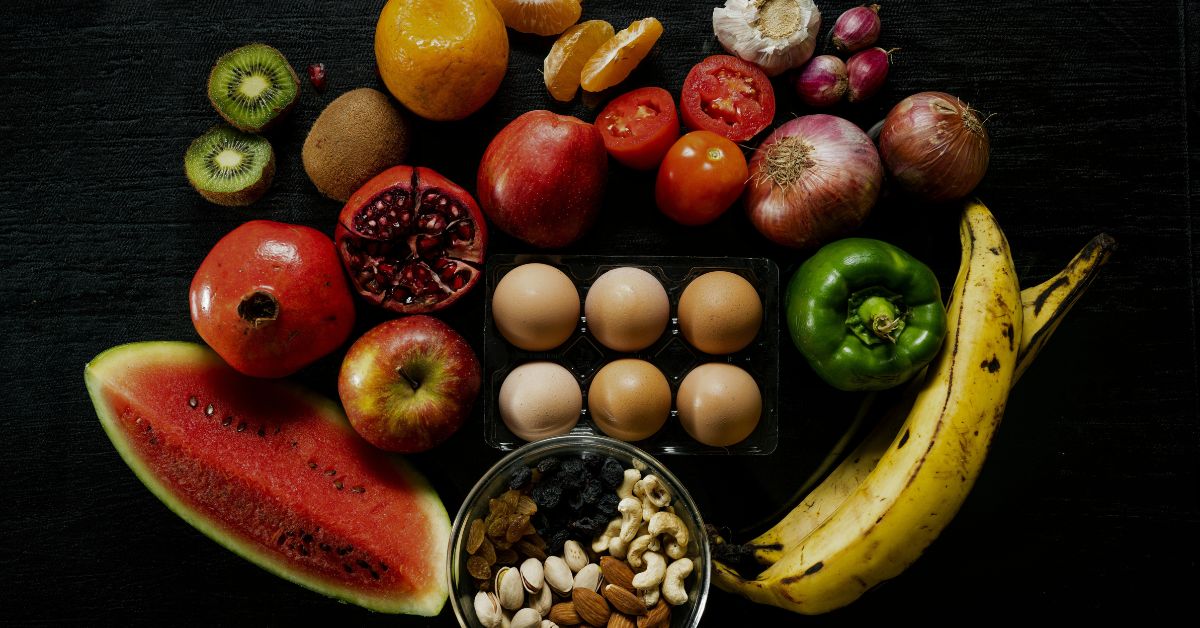
They include structural proteins and fats, essential amino acids that help build muscle, bone, skin, and organs; minerals such as calcium, phosphorus, iron, zinc, magnesium, potassium, copper, iodine, and chloride; and vitamins that support countless processes in the body.
And that doesn’t even begin to cover hydration, movement, and light, particularly sunlight, which regulates a vast number of biological processes.
Let me put it this way…
Our body operates on a 24-hour cycle directed by light. Yet in our modern world, it’s often dysregulated by screens, blue light, and artificial lighting.
So what’s the solution?
It’s not just about doing the things we know are good for us, eating nutritious whole foods, moving our bodies, prioritising sleep, but doing them consistently and well.
It’s about gradual, sustainable growth.
The Power of Small Choices
For example, in the supermarket, we have choices:
Organic or non-organic vegetables.
Or, do we skip the supermarket altogether and buy directly from local farmers?
Or, do we try to grow our own?
There are levels to this journey.
We choose where we “sit” for one of a better word, based on our current circumstances, because money and lifestyle do play a role.
Trying to do everything at an optimal level all at once often leads to burnout.
That’s why a consistent, gradual approach is the best, in my opinion, because it’s the most sustainable one to give our bodies the raw materials that they need to heal themselves and function more optimally again.
This is where agency comes in. Because we get to choose what we do and what we focus on, depending on our current circumstances and where we are in our health journey.
A Simple Example: Food Choices
Take nutrition:
We choose whether we buy a pack of apples, organic or not, or a tub of Pringles.
And, I’m not having this idea that, contrary to popular belief, eating healthily is always more expensive than ultra-processed food.
After a quick search, a 6-pack of apples costs £1.80, while a tub of Pringles costs £1.95, even on offer.
We all know the healthier choice.
Some may disagree, but I believe:
We become what we eat, not literally, but figuratively.
In the sense that food becomes the building blocks of our body.
Loads of metabolic and biological processes make this happen, far exceeding my pay grade to comprehend, let alone explain them.
The challenge is that, if you don’t know, our soil is so depleted due to modern agriculture that the apples our ancestors ate 100 years ago no longer have the vitamins, minerals, etc that they do today.
We would need to eat an abundance of them, and probably get sick due to the sheer amount, to be anywhere close to the nutritional content of 100 years ago.
That said, if it’s a choice between an apple and a tub of Pringles, the apple wins every time!
Awareness Creates Advantage
Being aware of these things can help us to stack more in our favour, as we navigate our health journey.
It may encourage us to choose the organic option, or better agricultural growing methods, or even to experiment with eating seasonally, which is what our ancestors did and can all increase the nutritional value of whole foods.
My point is simple:
We all have agency to choose.
If we’re still falling a bit short, ie, having the raw materials we need, this can leave many of us feeling disempowered and questioning, well, what’s the point?
Now, I’m not a conspiracy theorist, but it is a little bit coincidental that while the nutritional value of whole and natural foods diminishes, due to soil depletion, supplement companies begin to emerge and rise in prominence in our modern culture.
Look, supplements can play an important role in filling the gap between whole and natural foods and the raw materials our body needs in order to thrive.
However, that doesn’t mean we should jump the gun and go directly to supplements. Especially, if we believe we can outdo the negative effects of ultra-processed foods because we “take supplements”.
Food First, Then Supplement
It’s in the name…
Supplements. To supplement what we’re already getting through whole, natural, real food.
Food first is my number one principle that, of course, I follow and recommend to others. After that, supplementation is often necessary, especially, as stated, given our modern world context.
When it comes to supplements, a personalised approach, much like food, is often the best approach. Companies, none of which I’m associated with (at the time of writing), like Health Function, etc, make this much easier, because you can get blood labs done directly without having to go through a Doctor, which in my experience can be gatekeepers in wanting to know where your gaps are, and what vitamins, minerals, and compounds you’re low in to supplement with those.
Sure, some universal science-backed supplements would benefit us all, like amino acids, vitamin D, omegas, magnesium, etc., because most of us are deficient in these, and they give the body the raw materials it needs to not only heal itself but thrive.
Look, I get it…
Health can be hard to navigate, especially when we’re not feeling our best selves. Hopefully, this provides some mindset shifts and perspectives to help with that journey.
Approaching health through the lens of raw materials, ie, what are the raw materials our body needs to heal itself and then thrive, is one that I found can be extremely helpful in navigating health information overload.
The TLDR
The TLDR is that:
Our bodies can heal themselves, but sometimes they struggle, especially given the modern world that we live in.
When this happens, it often needs a little helping hand, which can come in many forms.
Start with nature and natural resources, and do the “basics” really, really well, i.e. sleep, nutrition, movement, light, etc., before branching out to other methods such as supplementation and overall finding out the raw materials that you could be missing.
This can be a challenge in its own right, especially given our current medical system and modern world context.
But don’t give up. Or blindly accept sickness or ill health and accept a life far less than one we’re all capable of living.
We could only be one or two raw materials away from feeling our best selves possible and thriving. I’m not saying that’s always the case, but it could be, and by giving up, we will never know.
This is the journey that we are all on.
The Key Takeaways on The Raw Materials Your Body Needs
- Healing is Natural, But Can Be Hindered: Your body has an innate ability to heal itself from minor injuries. However, modern lifestyle factors and poor nutrition can slow this process, leading to chronic conditions because the body lacks the necessary raw materials.
- Functional Isn’t Optimal: Simply being able to perform daily tasks doesn’t mean you are in optimal health. The current standard for “normal” often includes chronic issues like fatigue and brain fog, but you don’t have to accept this as your baseline.
- Identify the Core Building Blocks: True health requires a supply of essential raw materials. These include structural proteins and fats, a wide range of minerals and vitamins, proper hydration, consistent movement, and adequate exposure to natural light.
- Small, Consistent Choices Matter Most: Overhauling your entire lifestyle at once can lead to burnout. Instead, focus on making small, sustainable choices consistently, like choosing whole foods over processed snacks. These small decisions compound over time for significant health benefits.
- Prioritise Food Before Supplements: Always adopt a “food first” approach. Build your health on a foundation of whole, natural foods. Supplements should be used to fill specific nutritional gaps, not as a replacement for a healthy diet.
FAQs for The Raw Materials Your Body Needs to Heal and Thrive
What are the essential ‘raw materials’ my body needs?
Your body requires a variety of building blocks to heal and function optimally. These include proteins, fats, essential amino acids, minerals like magnesium and zinc, and a full spectrum of vitamins. Beyond nutrition, hydration, daily movement, and natural sunlight are also critical raw materials for your health.
Why might a simple cut take longer to heal now than when I was younger?
Slower healing is often a sign that your body is lacking the necessary resources. This can be due to underlying nutritional deficiencies or unhealthy lifestyle choices that interfere with your body’s natural repair processes. It’s a signal that your system needs more support.
What’s the difference between being ‘functional’ and ‘optimal’?
Being functional means you can get through your day, but you might be dealing with persistent issues like fatigue, brain fog, or minor aches. Optimal health is about feeling vibrant, energetic, and clear-headed, allowing you to truly thrive rather than just get by.
Should I focus on food or supplements for better health?
Always prioritise food first. A diet rich in whole, natural foods provides the foundation for good health. Supplements are meant to ‘supplement’ your diet by filling in specific nutritional gaps that are difficult to cover through food alone in the modern world.
How can I make healthier choices without feeling overwhelmed?
Start with small, manageable changes. Instead of trying to perfect everything at once, focus on one simple choice at a time. For example, choose an apple over a packet of crisps or go for a short walk. These small, consistent actions build momentum and lead to lasting change.