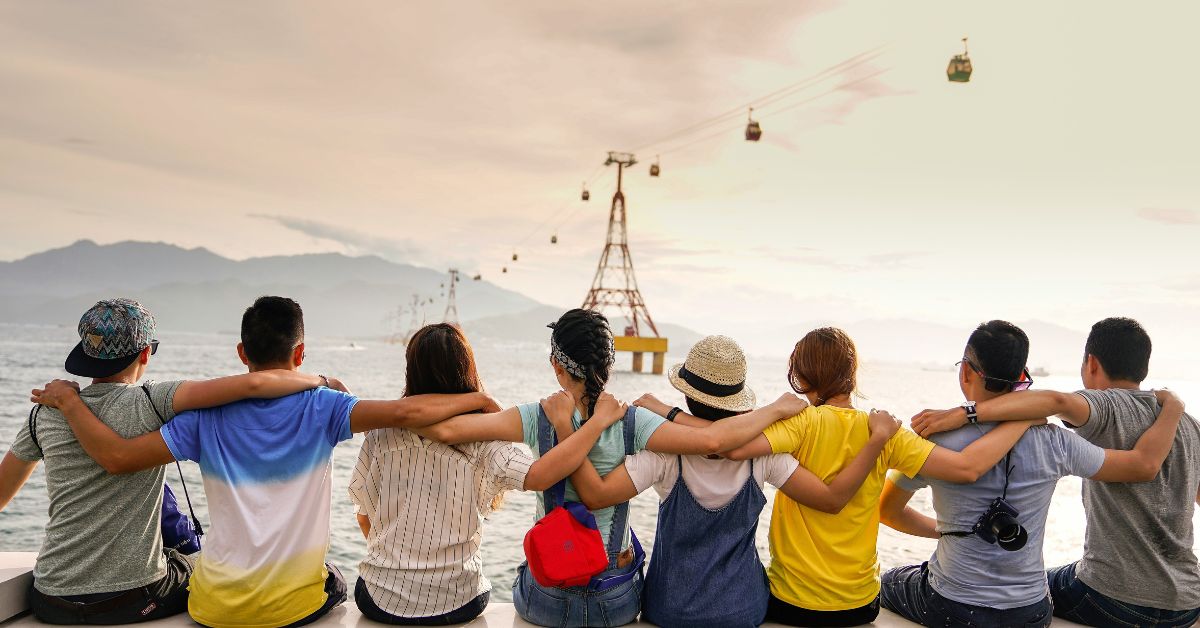
This year has taught me many important lessons, and in a few weeks, I will share the top lessons I’ve learned this year and how I’ve applied them.
One of those lessons is the importance of relationships, which has been reiterated to me time and time again this year, in particular. And that, alongside our health, our relationships are the bedrock of what it means to live a meaningful life.
An Introvert’s Perspective
This is coming from someone who values alone time, solitude, and is naturally an introvert.
I don’t think I’ll ever be a natural party starter, and approaching strangers and making conversation, especially in crowded social environments, will be an ever-lifelong challenge.
The truth is that we’re all on the introversion/extroversion spectrum, and I’m most definitely towards the introversion side.
This all manifested into the belief that I don’t need relationships or to be around other people, but rather that I choose to, for one reason or another or, in some situations, have to.
And while, to a certain degree, we all choose the relationships we form, build and invest in, the notion that I, or any of us, can do without them is a total fallacy.
I was wrong… ❌
And many events this year, albeit small, have reiterated this fundamental truth.
Small Moments, Big Realisations
Examples that come to mind include…
The Power of Shared Experiences
Travelling to Europe for the first time.
I originally wanted to do it on my own to prove that I could. Even though, as I’ve recently realised, I didn’t need to prove anything to anyone, not even myself, but that’s probably another story for another day.
Instead, I went with my brother, and we had a great time.
This reiterated that shared experiences are the best experiences.
Sure, if I had travelled on my own, it would have propelled my personal growth. But I’m confident I’ll have those opportunities in the future.
The Hidden Value of Presence
Another example is staying away from home (excluding the trip to Europe) multiple times this year.
I’ve probably spent more nights away from home this year than I have in an extremely long time, and despite what I was doing, from chilling in the evening, preparing food, or just wandering around, it’s all kind of weird doing it on your own…
And I mean really on your own…
I can do many of these things by myself when I’m at home, i.e., chilling in my room, but having at least someone in the house brings a level of safety, comfort and security that I think many of us undervalue, especially when it comes to our loved ones.
Let me put it this way: being in the presence of others, especially our loved ones, is something most of us can take for granted.
I’ve definitely developed a greater sense of gratitude and appreciation for my family, and value the time we spend together much more!
I’ve even noticed it with small things like daily walks and workouts, most of which I do on my own. The times I’ve had the pleasure of walking with family or friends or going to the gym with them have added something extra special that makes it a little bit more enjoyable, something we don’t get when we do these things on our own.
That’s not to say I can’t be on my own or don’t value alone time. I crave some kind of daily solitude, and I definitely need these moments!
I’ve just realised that life doesn’t seem as… good? on our own, as it does with loved ones.
The Hard Part: Navigating Relationships
The challenge with this is that navigating relationships and people, including me and you, can be difficult.
We can be a pain in the arse, annoying, and frustrating. You name it! 😂
Therefore, I’ve concluded that one of the best things we can do with our time is to learn the art of navigating relationships and to develop the skills to help us do so, skills such as communication, active listening, and conflict resolution that can help us navigate relationships that are so important to navigating life.
And this isn’t just because we all have to deal with other humans at some point, but because relationships, again alongside our health, are the backbone of what it means to live a good, meaningful life.
This isn’t just intuition, either. The Harvard Study of Adult Development, one of the longest-running studies of its kind, found that people who invested time and energy in their relationships reported significantly greater well-being throughout their lives.
As Tony Robbins says, “the quality of our life comes down to the quality of our relationships.”
That quote didn’t used to resonate with me. But the older I get, the more that has changed, and now it resonates more than ever.
So, What Does This All Mean?
The bottom line?
Don’t take relationships and your loved ones for granted.
And get very, very, very good at navigating them!
Our relationships, especially those developed over time, amplify nearly, if not all, aspects of our lives.
They make life better, even if, in the challenging times, we think not and believe, like I used to, that we can do without them.
We need relationships. We need people. We need each other.
We’re social creatures, at the end of the day…
Don’t forget that!
The Key Takeaways on Building Meaningful Relationships
- Introverts Need Connection Too: Even if you value solitude, the idea that you can thrive without relationships is a fallacy. Humans are social creatures who need connection for a fulfilling life.
- Shared Experiences Are More Powerful: Doing things with others, like travelling or daily walks, adds a special quality that enhances enjoyment and creates lasting memories compared to solo activities.
- The Value of Presence: The simple presence of loved ones provides a sense of safety, comfort, and security that is often taken for granted until you are truly alone.
- Working through Relationships is a Skill: People can be challenging. Developing skills like communication, active listening, and conflict resolution is one of the best investments you can make for your well-being.
- Practical Steps for Stronger Bonds: To cultivate strong relationships, connect with loved ones daily, build bonds on honesty and authenticity, and practise being lenient with others while holding yourself to a high standard.
FAQs for Why Relationships Are the Backbone of a Good, Meaningful Life
Why are relationships so important, even for introverts?
While introverts need solitude to recharge, we are all social creatures. The article explains that relationships provide a sense of security, comfort, and shared joy that is essential for a meaningful life, a truth that even dedicated introverts come to realise.
What does the Harvard Study of Adult Development say about relationships?
This long-term study found a direct link between well-being and relationships. People who invested time and energy into their connections with others reported being significantly happier and healthier throughout their lives.
How can I improve my relationships every day?
You can start with small, consistent actions. Make a point to connect daily, whether it’s a quick check-in with family or lunch with a friend. This regular contact strengthens bonds and reminds you that you’re not alone.
What are the most important skills for working through difficult relationships?
The article highlights that learning the art of relationships is key. Essential skills include effective communication, active listening, and conflict resolution. Developing these helps you manage the inevitable frustrations that come with human interaction.
What does it mean to be ‘lenient with others and strict with yourself’?
This is a personal growth strategy for improving relationships. It means holding yourself accountable for your actions and integrity, while offering patience and forgiveness to others. This approach helps your relationships flourish by focusing on what you can control: yourself.